
Beef: Buying, Storing, and Cooking It Right
Beef confuses people at the counter because the same animal goes by a dozen cut names, and one temperature mistake turns an expensive steak into a chewy lesson. This page keeps it plain: the cuts that matter, how long beef keeps, and the two numbers that cover every doneness argument.
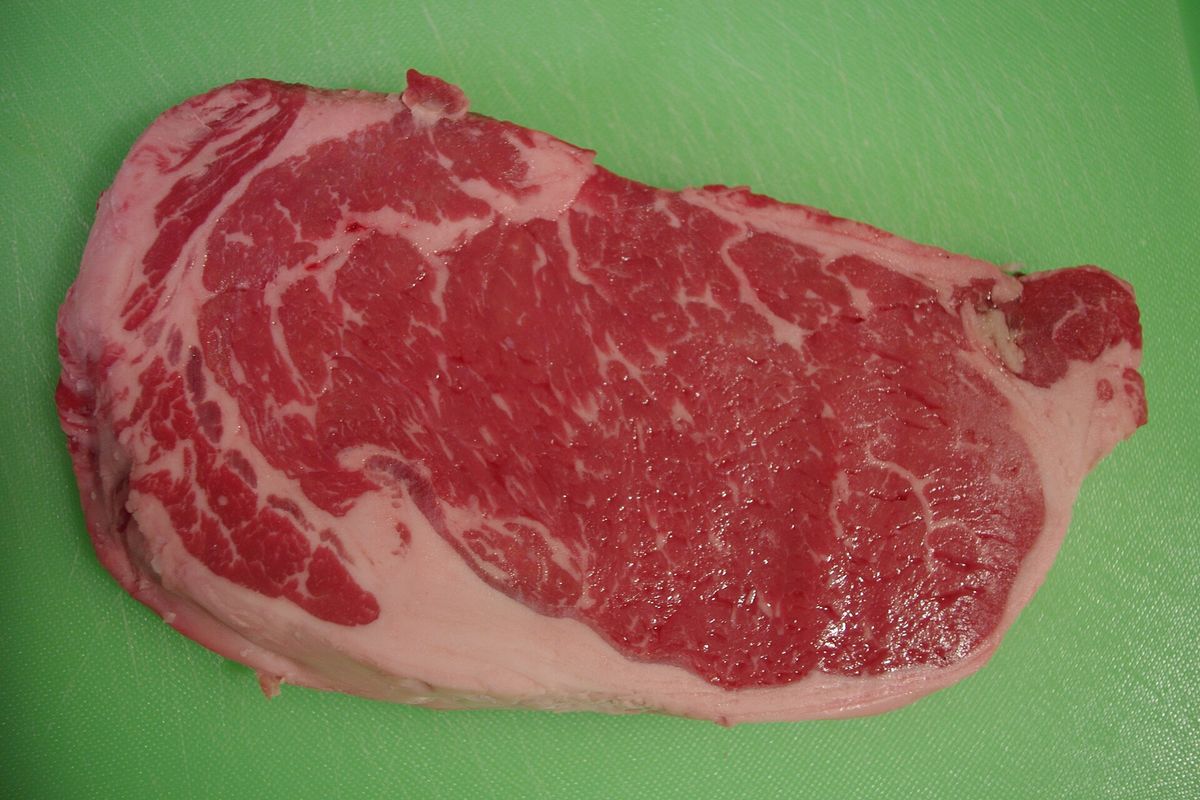
Photo: @WCPCLM 2002258 / Wikimedia Commons, CC0
What it is
The workhorse cuts fall into two families. Quick cuts, tender by anatomy, cook fast with high heat: steaks from the loin and rib, like ribeye, sirloin, and tenderloin, plus flank and skirt for fajitas. Slow cuts, loaded with connective tissue, need low heat and time: chuck for pot roast and stew, brisket, shank, and short ribs, which turn tender only after hours of braising.
Ground beef is its own thing, usually 70, 80, 85, or 93 percent lean. The fat number is flavor, 80/20 browns juicier burgers than 93/7, which is why the lean stuff needs a gentler hand or a sauce.
How to buy
Bright cherry red is fresh beef, and the slight brown-gray inside vacuum packs is metmyoglobin, a normal oxygen response, not spoilage. Smell beats color: fresh beef smells faintly sweet or like nothing. Pass on anything sour, slimy to the touch, or with pooled grayish liquid in the pack.
For steaks, look for even marbling, the thin white threads of fat inside the meat, because that is where the flavor and juiciness live. Thick cut steaks, 1.5 inches or more, are much harder to overcook than thin ones. For slow cuts, chuck roast should look moist and deeply red, with fat running through it, not around the edge only.
How to store
Raw steaks and roasts keep 3 to 5 days in the coldest part of the fridge. Ground beef keeps only 1 to 2 days, so cook it or freeze it fast. Cooked beef keeps 3 to 4 days airtight.
Freeze anything you will not cook in time. Steaks and roasts hold quality 4 to 12 months, ground beef 3 to 4 months, wrapped tight with the air pressed out. Thaw in the fridge overnight, never on the counter. A 1-inch steak needs about a day, a 3-pound roast needs two.
How to prep
Pull the beef out 30 to 60 minutes before cooking, a cold center cooks unevenly. Pat it bone dry, season with salt and pepper, and get the pan properly hot before the meat lands, because the brown crust is the Maillard reaction and it needs heat and dryness, not steam. Do not crowd the pan or the meat boils in its own juice.
Doneness by thermometer, in the thickest part: 145 F (63 C) for steaks and roasts, medium rare, with a 3 minute rest, which is the FDA standard with the rest built in. 160 F (71 C) for ground beef, every time, no exceptions, because grinding spreads any surface bacteria through the whole batch. Slow cuts are done by tenderness, not temperature, they are ready when a fork twists in with no fight.
Substitutes
- Lamb: for braises and stews, lamb shoulder swaps for chuck roast one to one with a gamier edge, and the same low and slow method applies.
- Pork: pork shoulder braises like chuck and costs less, and pork tenderloin cooks like a lean steak to 145 F (63 C) with a short rest.
- Mushrooms plus beans: for a plant based braise or chili, a mix of quartered mushrooms and brown lentils gives the chew and the savory depth, though nothing replicates beef's fat, so add a knob of butter or olive oil if that matters to you.
Questions cooks actually ask
What temperature is beef fully cooked?
Steaks and whole cuts: 145 F (63 C) with a 3 minute rest, which reads medium rare and is the FDA safe standard. Ground beef: 160 F (71 C), no pink, because grinding distributes bacteria. Braises and stews: cook until tender, usually 190 to 205 F (88 to 96 C) internal, where the connective tissue has fully broken down.
Is brown beef bad?
Not necessarily. Brown means the myoglobin has met less oxygen, which happens in vacuum packs and in the middle of the pack. Smell it and touch it: sour smell or sticky slime means it goes, brown with a clean smell and dry surface is fine to cook today.
Why is my steak tough and gray?
Two usual reasons: the pan was not hot enough, so the meat steamed instead of browning, or a tender cut got cooked well past medium. Tender cuts want high heat and less time, tough cuts want low heat and lots of it. Gray plus tough usually means both went wrong at once.
Can I refreeze thawed beef?
If it thawed in the fridge, yes, refreezing is safe though it costs a little juiciness. If it thawed in cold water or the microwave, cook it first, then freeze the cooked beef.