
Chicken: Buying, Storing, and Cooking It Right
Chicken is the protein most of us cook most, and also the one people stress over, because it is lean, and because done is not something you can see with confidence. This page puts the whole picture in one place: the cuts, how to shop for them, how long they keep, and the one number that settles every is it cooked argument, 165 F (74 C).
None of this is fancy, but it is the stuff that makes recipes work. Every chicken recipe on TasteBoard, from garlic butter chicken bites to juicy baked chicken breast to slow cooker chicken tacos, runs on these basics.
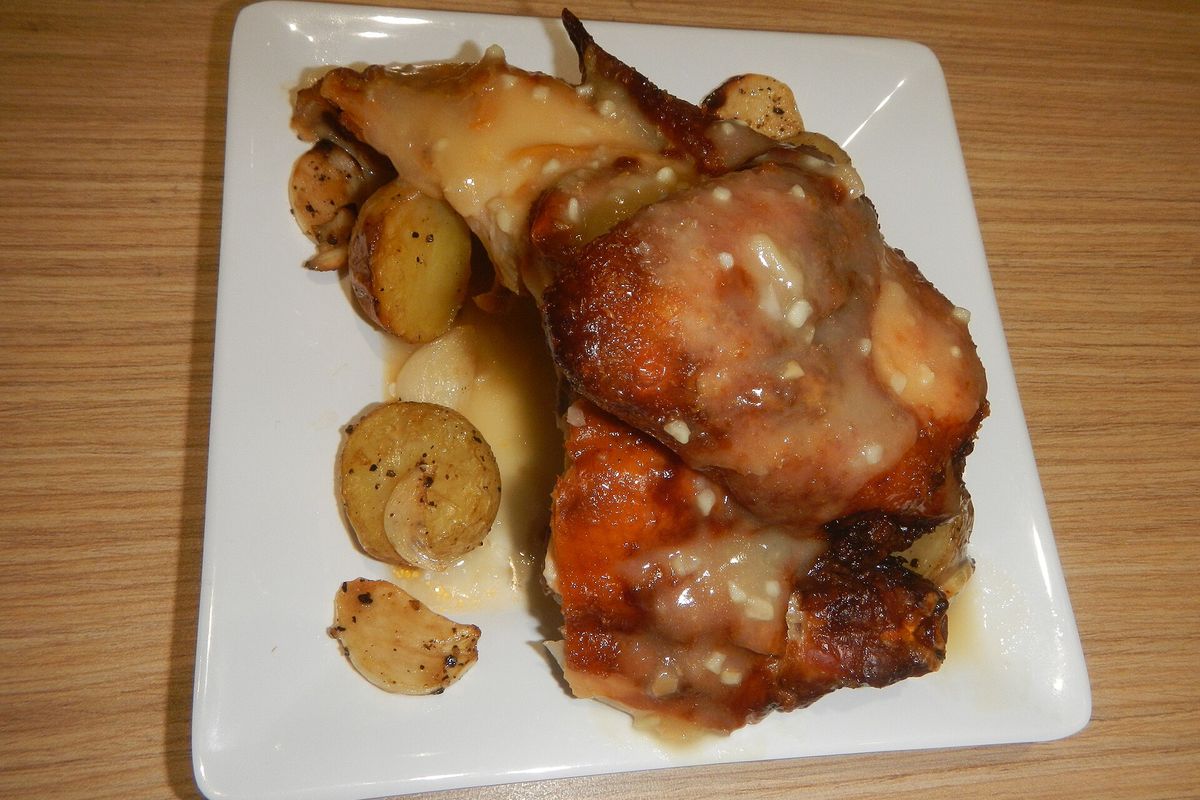
Photo: @Manjeshwari poet mysore / Wikimedia Commons, CC BY-SA 4.0
What it is
The bird breaks into a few workhorse cuts, and each cooks differently. Breasts are lean and quick, which makes them the easiest to dry out. Thighs carry more fat, so they stay juicy even if you run late, and they come bone in with skin, boneless with skin, or boneless and skinless. Drumsticks are cheap, hand held, and need more oven patience. A whole bird is the best value, roast it once and you get dinner plus cooked chicken for quesadillas and salads.
How to buy
Look for plump, evenly pink meat, with skin that lies flat and intact if you are buying skin on. The smell should be faint and clean, closer to nothing than anything. Pass on packages with gray patches, pooled dark liquid, or edges that look dried out. And if a sealed package is puffed up like a balloon, leave it there, that seal has failed.
The sell by date is a note to the store, not a countdown for you, but do not push past it either. Raw chicken gets 1 to 2 days in your fridge from the day you buy it, so cook it or freeze it promptly. If you shop once a week, put your chicken nights early in the week, or buy frozen.
Size matters too. Breasts around 8 oz (227 g) each cook evenly and match most recipe timing. Gigantic 12 oz (340 g) breasts are two servings wearing one outfit, cut them in half or add a few minutes and check with a thermometer.
How to store
Raw chicken keeps 1 to 2 days in the fridge, in its original packaging or rewrapped tightly, and set it on the lowest shelf or in a bowl so nothing drips onto other food. Cooked chicken keeps 3 to 4 days in an airtight container.
The freezer is your friend. Raw pieces keep well for 9 months, a whole bird about a year, and cooked chicken holds good quality for about 3 months. Wrap airtight, press the air out of freezer bags, and label with the date, because everything in a freezer eventually looks the same.
Thaw in the fridge overnight, big pieces and whole birds need a full day, sometimes two. Never thaw on the counter, the outside sits warm for hours while the middle is still frozen, exactly the situation bacteria wait for. In a hurry, seal the chicken and submerge it in cold water, changing the water every 30 minutes, about 1 hour for 1 lb (455 g), and cook it right after. Microwave thawed chicken goes straight into cooking.
How to prep
Pat it dry with paper towels before it hits the heat. Dry meat browns and crisps, wet meat steams, and this one step is what separates good sears and crispy skin from sad ones. Do not rinse raw chicken, water splashes bacteria around the sink instead of cleaning anything.
Even thickness is the other half. Breasts have a thick end and a thin end, so pound the thick end to match, or the thin side is overcooked by the time the thick side is safe. Then cook to temperature, not to color: 165 F (74 C) in the thickest part, read on an instant read thermometer, not touching bone. Let cooked chicken rest about 5 minutes before slicing so the juices stay in the meat instead of on the board.
Substitutes
- Turkey: the closest swap, and the same 165 F (74 C) rule applies. Turkey breast is even leaner than chicken breast, so it dries faster, take it off the heat without dawdling. Ground turkey swaps for ground chicken one to one, with a slightly earthier flavor.
- Tofu: for a plant based swap, use extra firm tofu, pressed and cubed. The method changes completely, no thermometer needed, and the flavor comes entirely from your seasoning, so do not skimp. Texture moves from juicy to springy, and a light dusting of cornstarch gets you crisp edges.
- Chickpeas: in tacos, quesadillas, and skillet dinners, a can of chickpeas standing in for chicken changes the protein and the texture, and dinner gets faster since there is nothing to cook through. Season them boldly.
Questions cooks actually ask
What temperature is chicken fully cooked?
165 F (74 C), measured in the thickest part with an instant read thermometer, not touching bone, since bone runs hot and can read early. That number applies to every cut, breasts, thighs, drumsticks, and ground chicken alike. Color is a bad judge, meat near the bone can stay faintly pink even when fully cooked.
How long can raw chicken sit in the fridge?
1 to 2 days from purchase, then cook it or freeze it. Cooked chicken gets 3 to 4 days. If day 3 rolls around on raw chicken, the freezer still works, the fridge does not.
Can I refreeze chicken after thawing?
If you thawed it in the fridge, yes, though it loses a little quality. If you thawed it in cold water or the microwave, cook it first, then freeze the cooked chicken instead.
How do I know chicken has gone bad?
Trust your nose over your eyes. Spoiled chicken smells sour or sulfury, and the surface turns tacky or slimy. The date can look fine while the chicken is off, so when in doubt, throw it out. No recipe is worth a sick household.