
Pasta: Buying, Storing, and Cooking It Right
Pasta is four ingredients and a shape, and it still goes wrong constantly, mostly through under-salted water and overcooked noodles. This page gives you the shape-to-sauce logic, the exact salting and timing habits, and the pasta water trick that makes cheap pasta taste like a restaurant plate.
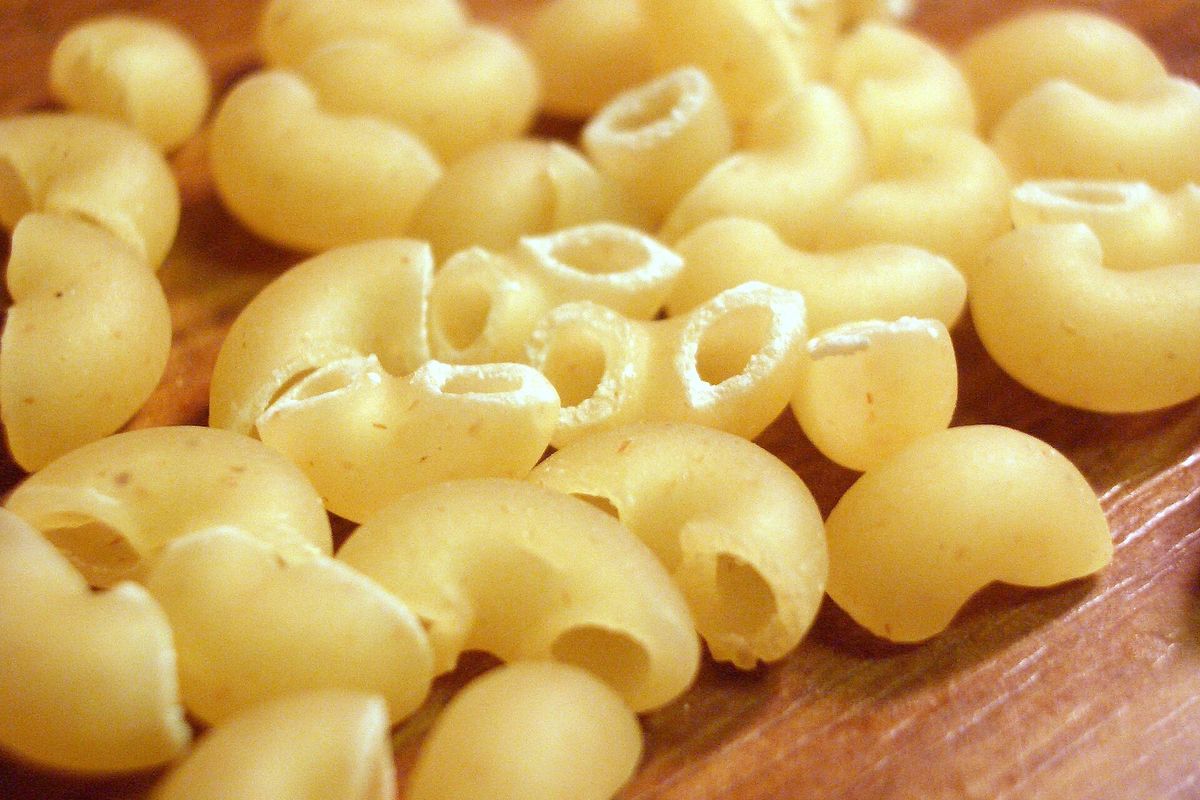
Photo: @FieldMarine / Wikimedia Commons, CC BY-SA 3.0
What it is
Dried pasta is durum wheat semolina and water, and the shape is engineering, not decoration. Long strands, spaghetti and linguine, carry slick olive oil and tomato sauces. Short shapes with ridges and curves, penne, rigatoni, fusilli, trap chunky sauces and baked dishes. Thin shapes, angel hair, collapse under heavy sauce, and stuffed shapes like ravioli are their own course and want butter or cream, not a heavy ragu.
Fresh pasta, eggs and flour, cooks in 2 minutes and is tender and rich, better for delicate fillings. Dried pasta has more bite and holds up to robust sauces. Neither is better, they are different tools.
How to buy
Dried pasta keeps for years, so buy shapes you actually cook. Look for bronze-die or rough-textured pasta if the label says it, the rough surface grabs sauce better than shiny extrusion. For fresh pasta, check the date, it is perishable, usually 2 to 3 weeks refrigerated or frozen.
One pound (455 g) feeds 4 generously as a main, 6 as a side. For baked pastas, figure a few extra ounces because they reabsorb sauce in the oven.
How to store
Dry pasta in a sealed container in the pantry keeps years past its quality date. Fresh pasta keeps 2 to 3 days refrigerated, or freeze it on a tray then bag it for 2 months, cooking straight from frozen. Cooked pasta keeps 3 to 5 days refrigerated, tossed with a little oil so it does not fuse into a block, and it freezes fine in sauced form.
How to prep
Water first, salt second: a big pot, 4 quarts per pound, and 1.5 tablespoons of salt in it, which tastes like the sea and is the only chance the noodle itself gets seasoned. Oil in the water does nothing but make sauce slide off later, skip it.
Then timing: start testing 2 minutes before the box says, and pull the pasta when the center shows a thin pale line, al dente. Save a mug of the starchy water before draining. Finish the pasta in the sauce pan with a splash of that water, the starch emulsifies the sauce so it clings instead of pooling. That minute in the sauce is the difference between pasta with sauce on it and pasta that tastes like sauce.
Substitutes
- Gluten free pasta: corn and rice blends cook closest to wheat, pull them a minute early because they go soft fast, and expect the water to foam more.
- Zucchini noodles: for a low carb swap, salt them, drain 20 minutes, and saute briefly, they never replace pasta's chew but carry the same sauces. Do not cook them long or they weep water into the sauce.
- Other grains: orzo is rice-shaped pasta and swaps in soups; for baked dishes, cooked penne and rigatoni trade freely for each other, and ziti stands in for either.
Questions cooks actually ask
What does al dente actually mean?
To the tooth: cooked through, with a firm center you feel when you bite, not crunch. It matters because pasta keeps cooking in the hot sauce after draining, so al dente at the pot becomes perfect on the plate, while soft at the pot becomes mush on it.
How much salt for pasta water?
About 1.5 tablespoons of kosher salt per 4 quarts, which sounds like a lot and is correct. The pasta absorbs only a little of it, and seasoned noodles are why restaurant pasta tastes better than home pasta with identical sauce.
Why save pasta water?
The water carries starch released from the noodles, and starch is the emulsifier that binds fat and liquid into a sauce that clings. A half cup splashed into the sauce pan turns a broken, oily sauce into a glossy one. Plain water does the opposite, it dilutes.
Should I rinse cooked pasta?
No, except for cold pasta salad. Rinsing washes off the surface starch that lets sauce grip, and it cools the noodles. For cold salads, rinse to stop the cooking and prevent clumping, then dress.