
Salmon: Buying, Storing, and Cooking It Right
Salmon is forgiving once you know the two numbers, the FDA's 145 F and the chef standard 125 F, and what they each mean for safety and texture. This page covers picking a good fillet, storage windows, pin bones, skin handling, and getting a crisp crust without overcooking the center.
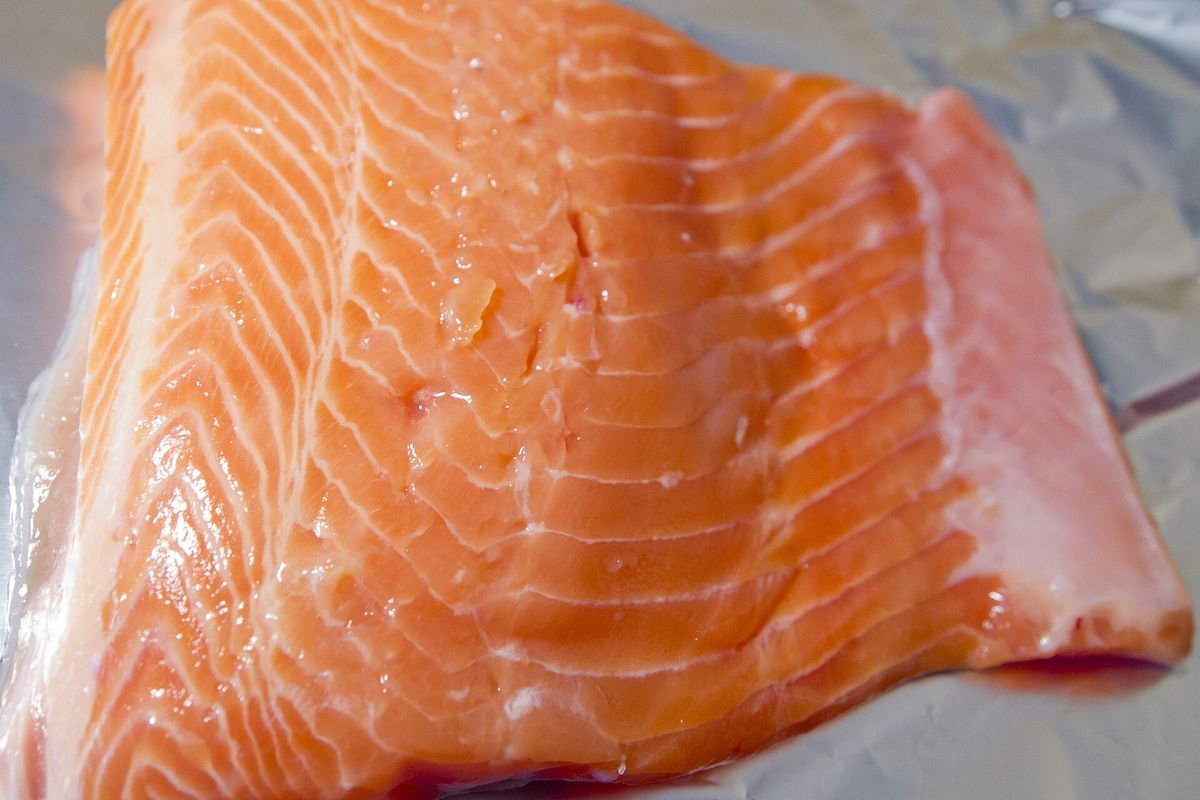
Photo: @Andy Li / Wikimedia Commons, CC0
What it is
Most salmon is one of two: farmed Atlantic, fattier, milder, available year round at a steady price, or wild Pacific, sockeye and coho, leaner, deeper colored, seasonal and stronger flavored. Farmed fat makes it forgiving in the pan; wild cooks faster and dries out quicker, so it wants lower heat or a marinade.
Color comes from diet, astaxanthin in wild fish, added to farm feed, and it says nothing about freshness. Freshness reads in the flesh's bounce and the smell, not the shade.
How to buy
Fresh salmon should smell like clean water or cucumber, never fishy, and the flesh should spring back when pressed. Look for moist, glossy fillets with tight flake lines, and avoid browned edges or pooled milky liquid. Sashimi-grade is a marketing term with no legal standard; if you ever eat it raw, buy from a fishmonger who handles for raw consumption and keep it cold, this matters.
A whole side is cheaper per pound and freezes in dinner portions beautifully. Skin on protects the flesh in the pan and crisps into the best part if you let it.
How to store
Raw salmon keeps 1 to 2 days in the coldest part of the fridge, ideally on ice in a dish. Cooked salmon keeps 3 to 4 days covered. Frozen holds quality 3 to 6 months, vacuum sealed longer, and thaw it overnight in the fridge, never warm.
Cooked salmon reheats gently, low oven or a covered pan with a splash of water, or flake it cold into salads and bowls, which is honestly where leftovers shine.
How to prep
Check for pin bones by running fingers along the fillet against the grain, then pull them with fish tweezers or clean pliers; they are cheap and the difference at the table is real. Pat the surface dry, salt it 15 minutes ahead if you have time, and start it skin side down in a hot oiled pan, pressing for 10 seconds so the skin lies flat. Most of the cooking happens on the skin side, flip for the last minute.
Doneness: the FDA says 145 F (63 C), opaque and flaking, which is fully safe and firm. Chef practice pulls it at 125 F (52 C), translucent center, relying on carryover heat; it is juicier and it is a personal risk call, like runny yolks. For young children, pregnancy, or immune compromise, 145 F is the number, no debate.
Substitutes
- Trout: the closest swap, cooks identically, milder and often cheaper, and the same 145 F (63 C) rule applies.
- Arctic char or steelhead: sits between salmon and trout, silky and quick, interchangeable by weight in almost any salmon recipe.
- Firm tofu or cauliflower steaks: for a plant based version of a glazed salmon dish, both take a miso or maple glaze well; roast hard at high heat for edges, since neither flakes like fish.
Questions cooks actually ask
What temperature should salmon be cooked to?
145 F (63 C) is the FDA safe standard, opaque and flaking. Many cooks pull it at 125 F (52 C) for a silkier center and accept a small risk, same logic as runny yolks. For anyone vulnerable, cook to 145 F, there is no downside worth arguing.
Should the skin stay on?
On, unless the recipe says otherwise. The skin shields the flesh from the pan's direct heat and crisps into the tastiest bite if pressed flat and cooked most of the way on that side. It peels off cleanly after cooking if you would rather not eat it.
Is farmed salmon bad for you?
No, it is a healthy fish with more fat and slightly less of some minerals than wild. Concerns about feed and antibiotics have improved a lot under certification programs, and farmed salmon is generally the sustainable and affordable weeknight choice, with wild as the seasonal treat.
Why did my salmon come out white and chalky?
Overcooked, and the white curd is albumin, protein pushed out by heat. It is harmless. Lower heat, a thermometer, and pulling at 125 to 145 F depending on your standard keep it to a minimum. Salting 15 minutes ahead also reduces it.