
Tuna: Buying, Storing, and Cooking It Right
Tuna lives two lives in the kitchen, the pantry can that makes lunches in five minutes and the steak that cooks like fine beef, and they need completely different handling. This page covers the can labels that actually matter, mercury guidance in plain terms, and the sear-and-stay-pink method for steaks.
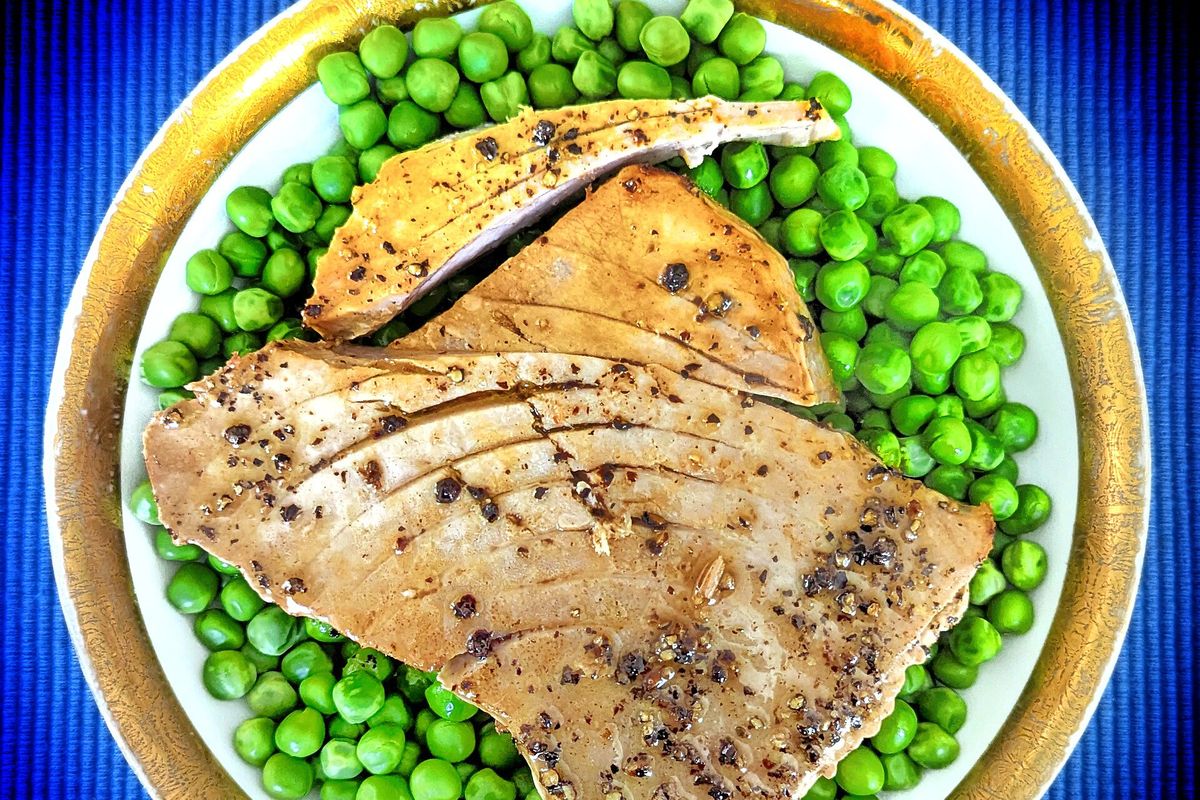
Photo: @Apeach316 / Wikimedia Commons, CC BY 2.0
What it is
Canned tuna splits three ways. Skipjack, sold as light tuna, smaller fish, lower mercury, the everyday can. Albacore, sold as white tuna, bigger fish, firmer and milder, higher mercury, the occasional can. And premium packings, fillet in olive oil or jarred in salt, which are closer to a pantry ingredient than a sandwich filling, richer and better drained into pasta and salads.
Fresh tuna, usually yellowfin ahi or bigeye, is a dense, red-fleshed steak fish that cooks like rare beef, nothing like its canned self. It is lean, which means it overcooks into chalk in about a minute of inattention.
How to buy
For cans, oil-packed carries more flavor and drains off if you want it lighter; water-packed is leaner and blander. Salt added or not is on the label, and skipjack carries roughly a third of the mercury albacore does, which is the entire basis of the light-versus-white choice for families.
For steaks, look for deep red or pink flesh, glossy, springy, smelling like clean water. Brown spots or a dull dry surface means it sat. A 1 inch steak sears properly; thicker ones go to the oven after the sear. Sustainability labels matter here, pole-and-line and troll-caught skipjack and ahi rate well.
How to store
Canned tuna keeps 2 to 5 years in the pantry, unopened, and once opened it must go to a covered container in the fridge, 3 to 4 days, never back in the open can, which taints the flavor and the can lining. Raw tuna steaks keep 1 to 2 days in the coldest part of the fridge, on ice ideally. Cooked tuna keeps 3 to 4 days refrigerated.
Freeze raw steaks wrapped tight for 2 to 3 months, thaw overnight in the fridge, and cook thawed tuna the day it thaws, it dries faster than other fish.
How to prep
Drain canned tuna well and flake it with a fork; a 30 second press in a strainer keeps sandwiches from going soupy. For tuna salad, minimum mayo, maximum texture: celery, onion, lemon, and a spoon of the oil you drained.
Fresh tuna wants high heat and a short clock: bone dry surface, screaming pan, 60 to 90 seconds a side for a 1 inch steak, leaving the center rosy. The FDA says 145 F (63 C) for fish generally; tuna steaks are traditionally served rare to medium rare, 115 to 130 F, which is the runny-yolk kind of personal risk decision, fine for healthy adults, and for anyone vulnerable it goes to full 145 F all the way through. Marinate briefly, 15 to 30 minutes, acid longer than that cooks the outside into chalk.
Substitutes
- Canned salmon or sardines: swap one to one in salads, sandwiches, and pasta, sardines are oilier and stronger, salmon is milder, and both carry more omega-3s per can.
- Swordfish or mahi for tuna steaks: meaty fish that hold up to the same high heat, though both cook through rather than rare, adjust expectation and timing.
- Chickpeas: for a no-fish tuna salad, mashed chickpeas with mayo, celery, and lemon make the same sandwich with the same crunch, a different animal entirely and a good one.
Questions cooks actually ask
Which canned tuna is lowest in mercury?
Skipjack, sold as light tuna, carries about a third of albacore's mercury. For someone eating tuna weekly, light tuna is the routine choice, albacore is the every-now-and-then choice, and bigeye should be rare. Pregnant women and young children should follow the FDA's weekly servings guidance, about 2 to 3 servings of light tuna a week fits it.
Why is my tuna steak gray and dry?
Overcooked. Tuna is lean and dense, and past medium it goes chalky gray and sawdusty in a minute. High heat, short time, pull it while the center is still pink, and rest it 2 minutes like a steak.
Is oil-packed tuna healthier?
The oil is usually olive oil and it carries flavor well; drained, the difference is small. Water-packed skips those calories if you count them, but you lose flavor, and dry tuna in a sandwich begs for more mayo than the oil ever contained. For pasta and salads, oil-packed wins on taste per calorie.
Do I need to wash canned tuna?
No, a rinse washes flavor away with the sodium, and a well-drained can is already low enough. If sodium is a medical concern, low-sodium cans exist and rinsing those lightly costs little.