
Lunch · Italian
Classic Pasta Salad
Pasta salad has ruined itself at a thousand potlucks by arriving dry, gluey, or drowned in watery dressing. The fix is a timing trick that changes everything: dress the pasta twice. A first coat of dressing while the pasta is still warm, when it drinks up flavor like a sponge, and a second bright hit just before serving, when the pasta has cooled and stopped absorbing.
The second fix is shape. Rotini, with its twists and grooves, holds dressing and catches vegetables. Long noodles clump, tiny pasta disappears, and smooth penne is fine but boring. The grooves are doing real work, and once you see the difference you will never make it with the wrong shape again.
Everything else is assembly: cherry tomatoes, olives, cucumber, mozzarella pearls, red onion soaked to soften its bite, and Italian dressing that you shake in a jar in ninety seconds. Make it in the morning for the evening party, and it is better for having waited.
By the TasteBoard team. Timed in a home kitchen, with total time added up and safe temperatures checked.
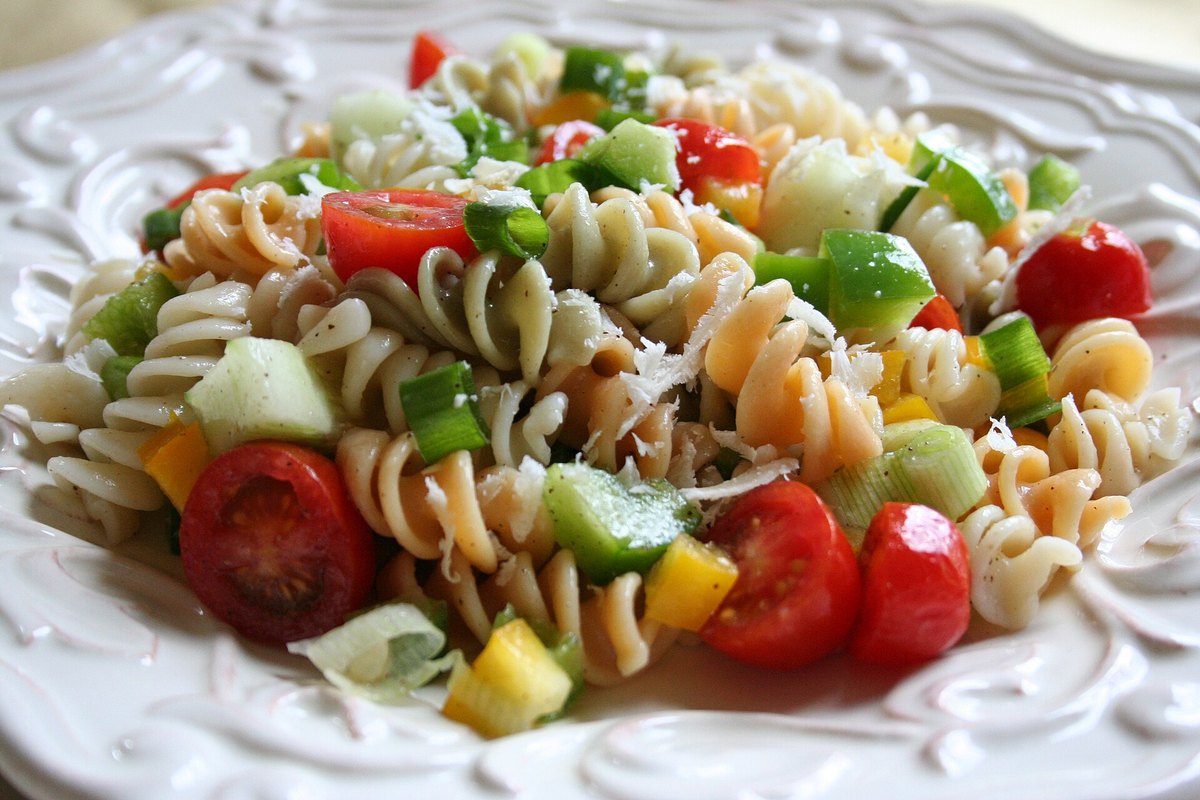
Photo: @Brynn / Wikimedia Commons, CC BY-SA 3.0
- Prep
- 10 min
- Cook
- 15 min
- Total
- 25 min
- Plus waiting
- 1 hr
- Servings
- 8
- Course
- Lunch
- Calories, about
- 340 per serving
Instructions
Tap a step to mark it done, saved on this device only. Timer buttons count down right here and beep when time is up.
Cook mode keeps your screen awake while you cook. Your browser does not support it, sorry, so keep the screen from sleeping the usual way.
Why you will love it
25 minutes of work and it improves for hours in the fridge.
Feeds 8 as a side, 6 as lunch, and doubles for a crowd.
Travels to picnics and potlucks better than any salad with leaves in it.
Vegetarian and endlessly adaptable to whatever the fridge has.
Kids pick around nothing; every ingredient in it is one they eat.
Tips
Save a splash of dressing back at every stage. Cold pasta always needs more than you think at serving time.
Soak the red onion. Raw red onion can dominate every bite, and 5 minutes in cold water keeps the crunch and loses the burn.
If making it more than 4 hours ahead, add the cucumber and tomatoes just before serving; they stay crunchy that way.
Dress twice, always. Once warm to soak, once cold to shine. This is the entire recipe in one sentence.
Swaps and variations
Italian salami and provolone: what changes: it becomes a hearty antipasto pasta salad that eats as a main.
Greek: what changes: feta instead of mozzarella, olives stay, add oregano and a squeeze of lemon.
Pesto pasta salad: what changes: swap the dressing for 0.75 cup pesto loosened with a spoon of pasta water.
Gluten free: what changes: brown rice rotini works well; rinse it a little longer, and it needs the full second dressing.
What to serve
Anything off the grill, which is its natural habitat from May to September.
Garlic bread, if pasta with a side of bread feels excessive, that is because it is, and it is delicious.
Cold fried chicken, the potluck dream team.
Calories shown are an estimate from standard ingredients, not medical advice. Brands and amounts change the number.
Questions cooks actually ask
Can I make it the night before?
Yes, and many people think you should. Hold back the tomatoes, cucumber, and half the dressing, refrigerate, and finish in the morning. Fully assembled the night before, the cucumber softens and the pasta drinks all the dressing.
Why is my pasta salad dry the next day?
Cold pasta absorbs dressing like a dry sponge, which is normal. Always reserve some dressing and toss it in just before serving, every time. This is not a mistake you made, it is pasta being pasta.
Can I use a different pasta shape?
Any short shape with grooves or nooks: fusilli, cavatappi, farfalle. Avoid long noodles and tiny pastas, and avoid orzo unless you are making a different, spoonable salad on purpose.
How much dressing is enough?
About 0.75 cup per pound of pasta, split across the two dressing rounds. The bowl should look glossy, never pooled. If in doubt, slightly under dress during assembly and finish at serving, because you can add but not subtract.
Cook something similar next
Keep exploring
All lunch recipes
More dishes like this, with honest times and how to choose.
Italian recipes
The same flavours, more ways to cook them.
Vegetarian recipes
Recipes that fit the same way of eating, checked for hidden ingredients.
Picnic and BBQ recipes
For the same kind of day or table.
Summer recipes
For the same kind of day or table.
Birthday party recipes
For the same kind of day or table.