Breakfast · American
Crispy Mashed Potato Cakes
Leftover mashed potatoes are a make-ahead ingredient pretending to be a side dish. Cold, sturdy, and already seasoned, they are one egg and a scoop of flour away from becoming the best thing on the table: golden cakes with crunchy edges and fluffy, buttery centers. Twenty minutes, start to finish, and they are better than the potatoes were on night one.
Cold is the whole game. Warm mash is soft and sticky and falls apart the moment it hits the pan; refrigerated mash holds a patty. The egg binds and the flour controls moisture, and how much flour you need depends entirely on how the original potatoes were made. A loose, creamy mash will want the extra flour a tablespoon at a time; a stiff one will not. Judge by feel: the mix should hold a patty shape without being gummy.
The frying details are small but they decide everything. Butter for flavor plus a spoon of neutral oil to raise the smoke point, because butter alone burns before a 3 to 4 minute crust can form. Medium-high heat, not high. And the hardest instruction in the recipe: do not flip early. The crust forms against the pan and releases on its own schedule; flip before that and half your crunchy bottom stays behind in the skillet.
By the TasteBoard team. Timed in a home kitchen, with total time added up and safe temperatures checked.
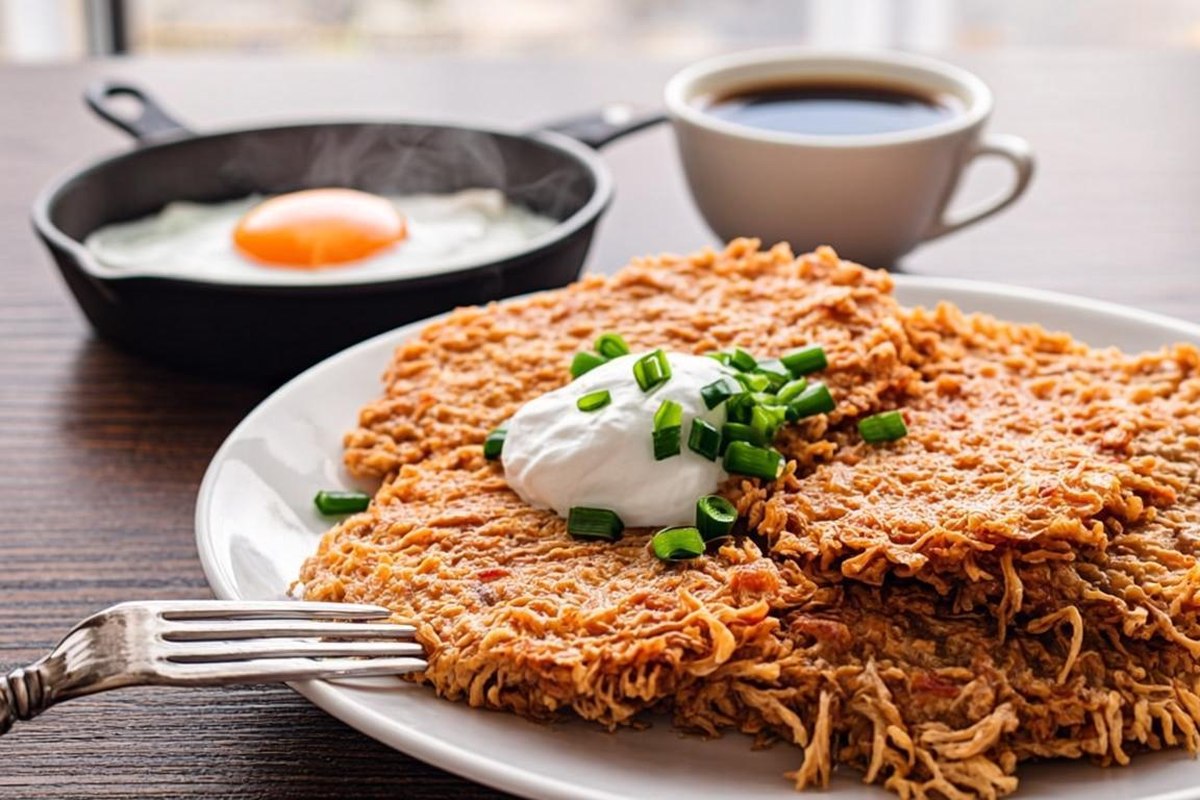
Photo: TasteBoard, AI generated image
- 30 min promise
- 20 min total
- Prep
- 10 min
- Cook
- 10 min
- Total
- 20 min
- Servings
- 4
- Course
- Breakfast
- Calories, about
- 280 per serving
Instructions
Tap a step to mark it done, saved on this device only. Timer buttons count down right here and beep when time is up.
Cook mode keeps your screen awake while you cook. Your browser does not support it, sorry, so keep the screen from sleeping the usual way.
Why you will love it
20 minutes from fridge to plate, and most of that is the pan's problem.
Works with any mashed potatoes, however they were made.
Crunchy, golden edges with a fluffy, buttery middle.
Five ingredients beyond the potatoes you already have.
Costs nearly nothing, since the expensive part happened last night.
Tips
The mash must be cold; this is the one rule with no workaround. If the potatoes are still warm, spread them on a plate and chill until cold through.
Match the flour to the mash. Creamy, buttery mash holds more water and needs more flour; dense mash needs less. The patty test is the only measurement that matters.
Butter plus oil is not a style choice; the oil raises the smoke point so the butter survives the full sear.
Hold the heat at medium-high. High burns the crust before the center warms, and medium never builds one at all.
Swaps and variations
Any melting cheese: what changes: pepper jack, gouda, or gruyere instead of cheddar; the cakes will absorb whatever cheese is in the drawer.
Loaded baked potato cakes: what changes: fold crumbled cooked bacon into the mix and top with sour cream and extra cheddar; a baked potato, rebuilt and improved.
Gluten free: what changes: use a 1:1 gluten free flour blend; the flour's only job here is moisture control, which the blends do fine.
Sweet potato: what changes: sweet potato mash works and runs a little softer, so expect to add a bit more flour before the patties hold.
What to serve
Sour cream and chives, already on the counter from the mixing bowl.
A fried egg on top, the runny yolk serving as built-in sauce.
Whatever produced the mashed potatoes in the first place, if any of it survived the night before.
Storage and reheating
Fridge: 4 days for cooked cakes, 2 days for formed uncooked patties, covered. Reheat in a dry or lightly buttered skillet over medium until crisp again and steaming at 165 F (74 C); the microwave works, but it hands you back a soft cake, which misses most of the point. Freezer: 2 months, best as uncooked patties frozen flat between layers of parchment, then thawed overnight in the fridge and fried as written.
Calories shown are an estimate from standard ingredients, not medical advice. Brands and amounts change the number.
Questions cooks actually ask
Why did my cakes fall apart?
One of three things: the mash was not cold, the mix was too wet and needed more flour, or you flipped before the crust released. Any single one will do it, so fix that one and the cakes usually hold.
Can I use instant mashed potatoes?
Only if they are stiff. Instant mash tends to be soft and gluey, so make it thick, chill it thoroughly, and add flour 1 tbsp at a time until a test patty holds. The result is denser but genuinely fine.
Can I bake or air fry these instead of pan frying?
You can, trading some crunch for convenience. Air fry at 400 F (200 C) with a spray of oil, about 10 minutes, flipping once; or bake at 425 F (220 C) on an oiled sheet, about 20 minutes, flipping halfway. Good cakes either way, just not the pan-fried crust.
Can I make the patties ahead?
Yes. Form them and refrigerate, covered, up to 2 days, or freeze them flat between parchment for up to 2 months. Fry refrigerated patties straight from the fridge, and thawed frozen ones the same way.
Cook something similar next


Keep exploring
All breakfast recipes
More dishes like this, with honest times and how to choose.
American recipes
The same flavours, more ways to cook them.
Vegetarian recipes
Recipes that fit the same way of eating, checked for hidden ingredients.
Weeknight recipes
For the same kind of day or table.
Winter recipes
For the same kind of day or table.
Thanksgiving recipes
For the same kind of day or table.