
Desserts · American
Soft Gingerbread Cookies
Most gingerbread cookies come with a rolling pin, cookie cutters, and an afternoon of piping icing. These come with a bowl and a scoop. The dough mixes in minutes, chills while you handle something else, and bakes into thick, chewy cookies with crackly sugar tops and a deep molasses flavor from two full tablespoons of ginger. There is nothing to frost, nothing to trim, and nothing left to do but eat them.
Molasses is the boss of this dough. It is hygroscopic, meaning it grabs and holds moisture, which is why these stay chewy for 5 days while other cookies are drying out by day two. It also makes the dough soft and sticky, which is why the chill is not optional. Scooped warm, the dough spreads into flat, sad wafers; chilled for an hour, it bakes up thick with a crackled top.
Two more details decide the outcome. The creaming, a full 2 minutes of butter and brown sugar until light, is where these cookies get their lift, because the sugar aerates the butter and that trapped air does most of the rising work. And pull them early: the tops should be cracked and the centers should still look slightly underdone, since the hot sheet keeps cooking them after the oven lets go. Cookies that look fully done in the oven are dry cookies tomorrow.
By the TasteBoard team. Timed in a home kitchen, with total time added up and safe temperatures checked.
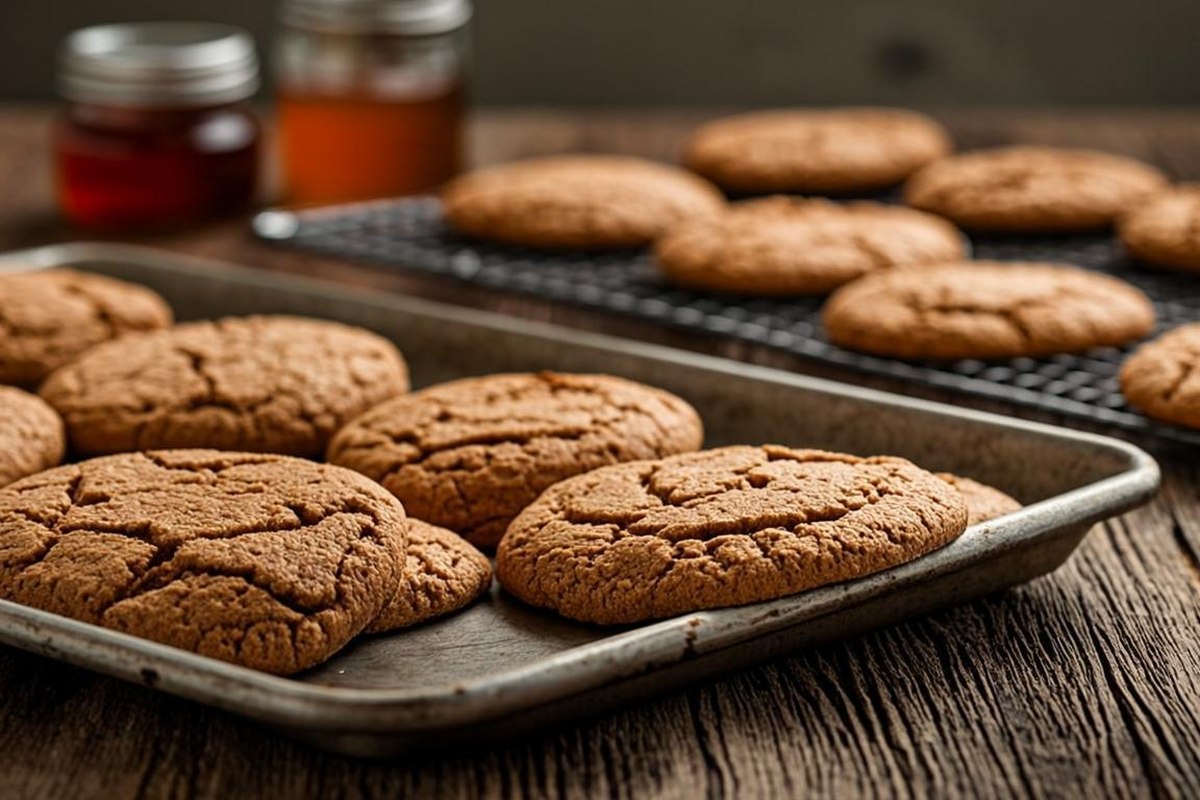
Photo: TasteBoard, AI generated image
- Prep
- 15 min
- Cook
- 10 min
- Total
- 25 min
- Plus waiting
- 1 hr
- Servings
- 24
- Course
- Desserts
- Calories, about
- 150 per serving
Instructions
Tap a step to mark it done, saved on this device only. Timer buttons count down right here and beep when time is up.
Cook mode keeps your screen awake while you cook. Your browser does not support it, sorry, so keep the screen from sleeping the usual way.
Why you will love it
No rolling pin, no cutters, no royal icing; a scoop does all the shaping.
Stays soft and chewy for 5 days in an airtight container.
15 minutes of work, then the fridge does the rest.
The coarse sugar gives crackly tops without any frosting.
Makes 24, sturdy enough for a cookie tin or a care package.
Tips
Use regular molasses, not blackstrap. Blackstrap is far more concentrated and bakes bitter; regular molasses is the flavor you are after.
Cream for the full 2 minutes. Under-creamed butter cannot trap air, and dense cookies are the result.
Judge doneness by eye, not the clock. The centers should look slightly underdone at the pull; carryover cooking on the hot sheet finishes them.
An airtight container is the entire storage strategy. Molasses pulls moisture from the air, so the cookies stay chewy largely on their own.
Swaps and variations
Cutout gingerbread men: what changes: chill the dough until firm, roll it a quarter inch thick on a floured counter, cut shapes, and skip the sugar rolling; they bake up crisper and snap instead of bend.
Orange gingerbread: what changes: add the zest of one orange along with the egg; the citrus brightens the molasses without fighting it.
Ice cream sandwiches: what changes: sandwich vanilla ice cream between two fully cooled cookies and freeze until firm; chewy cookies hold together where crisp ones shatter.
Extra gingery: what changes: fold a handful of chopped crystallized ginger into the finished dough; the warm pockets of heat are the point.
What to serve
Cold milk, the official beverage.
Strong coffee; gingerbread and coffee have been an old pair for a long time.
A plate for Santa, who will not be checking whether anyone rolled these.
Storage and reheating
Airtight at room temperature: 5 days, and they truly stay chewy, because molasses is hygroscopic and holds moisture. Skip the fridge; it stales cookies faster than the counter does. If you want the warm-from-the-oven effect again, 300 F (150 C) for 3 to 4 minutes does it. Freezer: 3 months for baked cookies, or freeze the dough balls and bake straight from frozen, adding a minute or two.
Calories shown are an estimate from standard ingredients, not medical advice. Brands and amounts change the number.
Questions cooks actually ask
Do I really have to chill the dough?
Yes. Warm molasses dough is soft and spreads flat, and no amount of wishful thinking firms up butter. One hour minimum, overnight is better, and the dough keeps in the fridge for up to 3 days if your plans move.
Can I use blackstrap molasses?
No. Blackstrap is a different product, more concentrated and much more bitter, and the cookies will taste like penance. Use regular molasses; the ingredient list means it.
Why did my cookies come out flat?
The dough was not cold enough, or the butter was too soft or partially melted when creamed. Melted butter cannot hold air, so there is nothing to lift the dough. When in doubt, chill the scooped balls before they go in the oven.
How do I keep them soft for days?
An airtight container at room temperature. The molasses does most of the work, but exposure to air wins eventually. If they start to firm by day four, a slice of bread in the container softens them overnight.
Cook something similar next

Keep exploring
All desserts recipes
More dishes like this, with honest times and how to choose.
American recipes
The same flavours, more ways to cook them.
Vegetarian recipes
Recipes that fit the same way of eating, checked for hidden ingredients.
Christmas recipes
For the same kind of day or table.
Winter recipes
For the same kind of day or table.