Lunch · Chinese
Garlic Sauteed Bok Choy Rice Bowl
Bok choy spent decades as the quiet vegetable at the bottom of takeout containers, and 2026 is its redemption arc. Searches for sauteed bok choy are up by a third, because one pan and four minutes turn it into something with actual texture drama: charred, almost smoky leaves on top and pale stalks that keep a water-chestnut crunch underneath.
The whole recipe is heat management. A genuinely hot pan, oil past shimmering, and the bok choy goes in cut side down and stays put. That contact is where the char comes from, and char is flavor. Move it too early and you get steamed bok choy, which is fine, the way boiled pasta is fine.
This bowl assembles around the greens rather than featuring them as a side. Rice for the base, the garlic soy butter glaze to pull it together, and a jammy egg because a seven minute egg makes any bowl feel deliberate. Fifteen minutes, one pan, one pot of rice, lunch.
By the TasteBoard team. Timed in a home kitchen, with total time added up and safe temperatures checked.
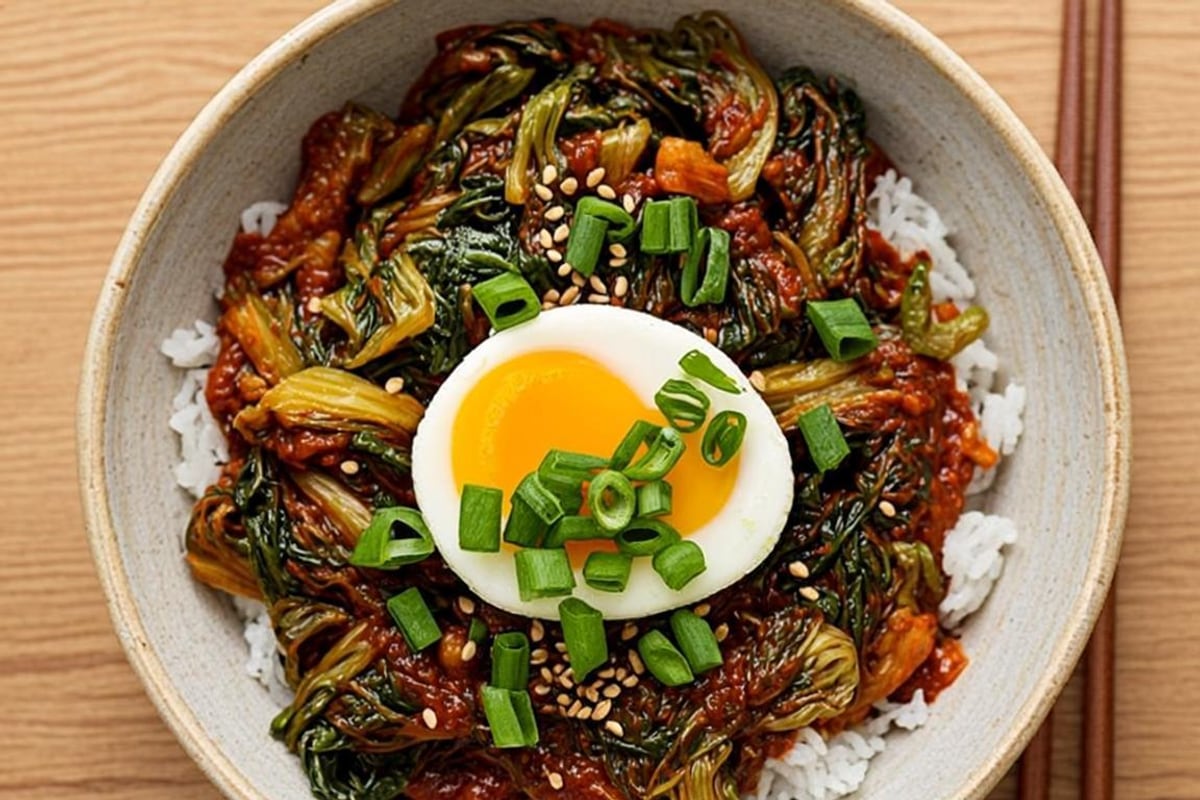
Photo: TasteBoard, AI generated image
- 30 min promise
- 15 min total
- Prep
- 5 min
- Cook
- 10 min
- Total
- 15 min
- Servings
- 2
- Course
- Lunch
- Calories, about
- 380 per serving
Instructions
Tap a step to mark it done, saved on this device only. Timer buttons count down right here and beep when time is up.
Cook mode keeps your screen awake while you cook. Your browser does not support it, sorry, so keep the screen from sleeping the usual way.
Why you will love it
Fifteen minutes including the egg, if the rice is cooked or leftover.
Crisp stalks and charred greens in the same bite, no mush anywhere.
The garlic soy butter glaze is five ingredients and improves everything it touches.
Works as a side, straight up, next to any protein you own.
Cheaper than one delivery bowl and on the table faster than the app opens.
Tips
Dry bok choy is the difference between char and steam. A salad spinner or a good towel pat-down is worth the minute.
Cut side down means the flat cut face on the pan. That face caramelizes; the round back mostly steams.
Leftover rice is better here than fresh, the grains fry a little in the glaze instead of going soft.
The glaze wants to be salty-sweet-garlicky in that order. Taste it before pouring; soy brands vary wildly.
Swaps and variations
Protein upgrade: what changes: sear 6 oz (170 g) tofu steaks or shrimp before the bok choy and rest them on the plate with the greens.
Fully vegan: what changes: olive oil for the butter and maple for the honey, nothing else moves.
Noodle bowl: what changes: rice becomes 6 oz (170 g) cooked ramen or udon tossed through the glaze.
Ginger bright: what changes: 1 tbsp grated ginger in with the garlic and a squeeze of lime at the end.
What to serve
Miso soup on the side if the day needs warming up.
Nothing, honestly. The bowl is a complete sentence.
Storage and reheating
Fridge: components keep 2 days, but assemble fresh, stored bok choy loses its snap and the glaze soaks in. Reheat rice with a splash of water, re-warm the bok choy in a hot pan for 30 seconds just to take the chill off, and cook a fresh egg, the old one will never be jammy again. Not a freezer meal.
Calories shown are an estimate from standard ingredients, not medical advice. Brands and amounts change the number.
Questions cooks actually ask
Can I use regular large bok choy?
Yes. Cut it into 1 inch wedges through the stem so each piece holds together, and add about a minute per side in the pan.
Why is my garlic bitter?
It browned. Burnt garlic turns acrid in seconds, so medium heat for that step and sliced rather than minced garlic, slices give you a wider margin of safety.
Can I char the bok choy without a wok?
Any heavy skillet works. The keys are high heat, dry greens, and the discipline not to stir. Crowding is the only real failure mode, so two batches beat one piled one.
What if I hate soft yolks?
Fry the eggs instead, crispy lacy edges, and break the yolk over the rice yourself. The bowl takes both personalities.
Cook something similar next
Keep exploring
All lunch recipes
More dishes like this, with honest times and how to choose.
Chinese recipes
The same flavours, more ways to cook them.
Vegetarian recipes
Recipes that fit the same way of eating, checked for hidden ingredients.
Weeknight recipes
For the same kind of day or table.
Back to school recipes
For the same kind of day or table.