
Lunch · Polish, American
Unstuffed Cabbage Roll Soup
Cabbage rolls are a wonderful dish with a labor problem: core the head, blanch the leaves, mix the filling, roll each one, then braise. This soup keeps every part of a good golumpki, the seasoned beef, the tender cabbage, the rice, the tomato broth, and collapses it into one pot and 45 minutes. The rolling was always the tax. This is the refund.
The most important step is the least visible one: frying the tomato paste for a full minute until it darkens. Tomato paste is concentrated and full of natural sugars, and browning them builds a depth that makes a 45 minute soup taste slow cooked. Skip it and the soup still works; it just tastes like a Tuesday instead of a Sunday.
The rice cooks right in the pot, which sounds lazy and is actually structural: as it simmers it releases starch that lightly thickens the broth, so you get body without a roux. Two prep details carry the texture. Chop the cabbage into 1 to 2 inch pieces so it melts silky instead of hanging stringy. And brown the beef properly first, 6 to 7 minutes, because gray, steamed beef is the difference between soup and really good soup.
By the TasteBoard team. Timed in a home kitchen, with total time added up and safe temperatures checked.
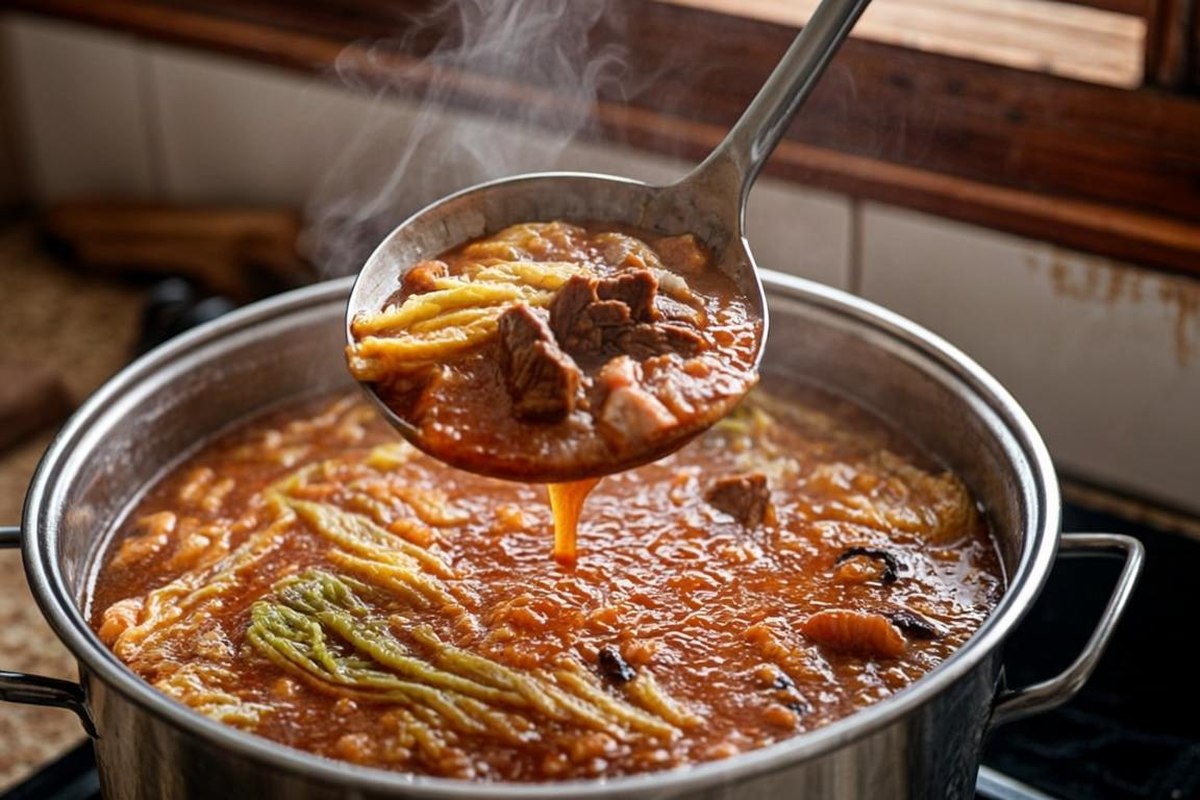
Photo: TasteBoard, AI generated image
- Prep
- 15 min
- Cook
- 30 min
- Total
- 45 min
- Servings
- 6
- Course
- Lunch
- Calories, about
- 380 per serving
Instructions
Tap a step to mark it done, saved on this device only. Timer buttons count down right here and beep when time is up.
Cook mode keeps your screen awake while you cook. Your browser does not support it, sorry, so keep the screen from sleeping the usual way.
Why you will love it
Everything you like about cabbage rolls, none of the rolling.
One pot, 45 minutes, and 20 of those are a covered simmer.
The rice thickens the broth as it cooks; no roux, no flour.
Cheap and filling: a cabbage, a pound of beef, a handful of rice.
Freezes well, so it is worth doubling while the cutting board is already dirty.
Tips
Let the tomato paste darken in the fat before any liquid goes in. That one minute is the difference between fresh and slow-cooked flavor.
Cabbage in 1 to 2 inch pieces, no bigger. Large pieces stay stringy no matter how long they simmer, and tiny ones disappear.
Keep 1 to 2 tbsp of the beef fat when draining. It carries the browned flavor from the bottom of the pot; the rest can go.
Season in two stages. Broth, tomatoes, and Worcestershire all bring their own salt, so trust the 1.5 tsp up front and adjust only at the end, after tasting.
Swaps and variations
Ground pork: what changes: pork is the other half of the traditional golumpki filling; swap it in whole, or use half pork and half beef, and nothing else moves.
Cooked rice: what changes: skip the rice in step 4 and stir in 2 cups cooked rice at the end; the broth stays lighter because no starch cooks out of it.
Slow cooker: what changes: do steps 1 to 3 in a skillet, then transfer everything but the rice to the cooker on low for 5 hours, adding the rice and switching to high for the last hour.
Vegetarian: what changes: swap the beef for 8 oz chopped mushrooms and a drained can of chickpeas, use vegetable broth, and replace the Worcestershire with soy sauce, since Worcestershire contains anchovies.
What to serve
Crusty or rye bread, because a broth this thick demands it.
A spoonful of sour cream on top, the traditional partner to golumpki.
The rolling pin, retired, displayed somewhere you can admire it.
Storage and reheating
Fridge: 4 days, and it thickens overnight as the rice keeps drinking broth; loosen with a splash of water or broth when you reheat. Reheat on the stove over medium, stirring now and then, until steaming at 165 F (74 C). Freezer: 3 months. The rice softens slightly and the cabbage holds, and the flavor comes through fully intact, so this is one soup worth doubling on purpose.
Calories shown are an estimate from standard ingredients, not medical advice. Brands and amounts change the number.
Questions cooks actually ask
Is this the same as golumpki soup?
It is exactly that dish, unstuffed. Golumpki (also spelled golabki or golumpki) are Polish stuffed cabbage rolls, and golumpki soup is the same filling, rice, beef, and cabbage, simmered in tomato broth instead of rolled. Searches for golumpki soup are up 95 percent this year, and every shortcut that makes this soup faster makes the same flavor the rolls would give you.
Can I use brown rice instead?
It works, but brown rice needs closer to 45 minutes of simmering, so the cabbage will go very soft, which some people actually prefer. Otherwise, stir in cooked brown rice at the end and keep the texture as written.
Why is the soup so thick the next day?
The rice keeps absorbing liquid even in the fridge. This is normal and costs nothing to fix; a splash of broth or water and 2 minutes on the stove restores it. Taste for salt after loosening, since you just diluted the seasoning.
Can I freeze it?
Yes, up to 3 months. Cool it fully first, freeze it in flat bags or containers, and thaw overnight in the fridge. The rice goes a bit softer, but the soup does not suffer the way pasta soups do.
I don't love cabbage. Will I hate this?
Honest answer: it still tastes like cabbage; no recipe can promise otherwise. But simmered in tomato broth rather than steamed, cabbage goes sweet and silky instead of sharp, and this is the dish that changes minds. Start with a slightly smaller head if you are nervous.
Cook something similar next
Keep exploring
All lunch recipes
More dishes like this, with honest times and how to choose.
American recipes
The same flavours, more ways to cook them.
Gluten free recipes
Recipes that fit the same way of eating, checked for hidden ingredients.
Weeknight recipes
For the same kind of day or table.
Winter recipes
For the same kind of day or table.